
An old episode of Ed, Edd n Eddy was playing in the background. For about ten seconds, the background colors and the character outlines were wrong. The two had somehow been swapped in production.
To someone who works in design, the mistake was glaring. I paused the TV and pointed the error out to two other people in the room.
Their reaction was identical: they had not noticed anything.
A cartoon produced by a major animation studio, aired on Cartoon Network, watched by millions of people over decades. A visible production error made the final cut. The show was still a hit. Nobody wrote in. The world kept spinning.
What That Error Actually Proves
Not that quality is optional. The opposite, in fact. Ed, Edd n Eddy had strong writing, a distinct visual identity, and comic timing that holds up thirty years later. Those are the things the audience came for, and the studio got every one of those right.
The swapped colors were a detail outside the set that the audience was actually grading. The work was good where being good counted, so a ten-second slip in a twenty-minute episode cost nothing.
Most people are not grading the thing you are grading. They are grading whether the work does what they came for.
This is the part that hits anyone who makes things for a living. Spend enough hours inside a project and you develop vision no visitor has. You see the four-pixel misalignment, the slightly-off kerning on a heading, the hover state that eases a fraction too slowly. Those become enormous to you, because you have been staring at the work for days.
Meanwhile the customer glances at the page for eight seconds and decides whether the business looks credible and whether the offer is clear.
The Curve That Explains Everything
Effort and perceived quality are not related in a straight line. Early effort produces enormous visible gains. The first pass takes a page from nothing to coherent. The second takes coherent to convincing. Each pass after that moves the needle less, while costing the same hours or more.
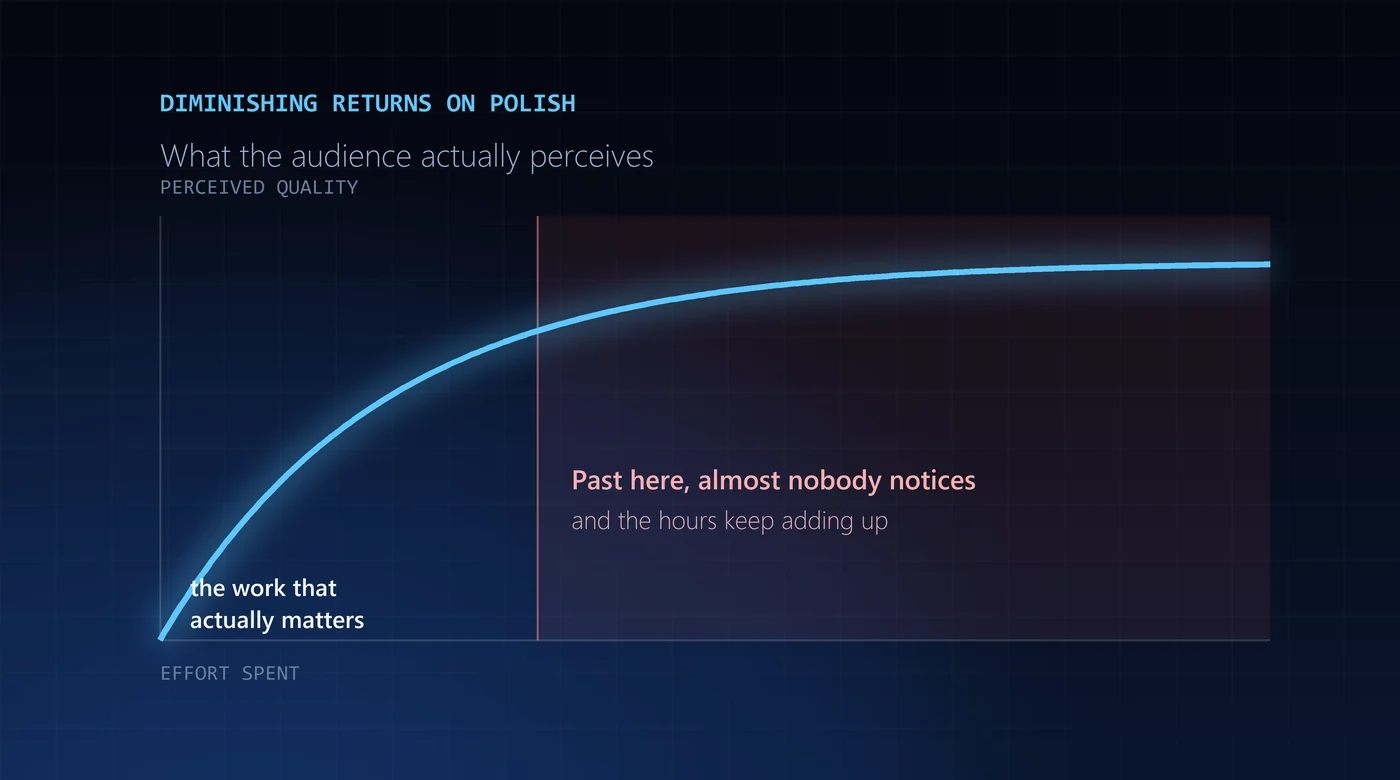
The trap is that the far end of the curve feels exactly as productive as the near end. Refining a shadow for ninety minutes feels like work, because the activity is work. The hours are real. The gain is the part that vanished.
Standards and Perfectionism Are Not the Same Thing
Caring about craft matters, and nothing here argues otherwise. Shipping carelessly is a different failure with a bigger price. The distinction worth drawing is between a standard and a compulsion.
High standards
- Measured against the audience and the goal
- Changes you could justify to somebody else
- Has a definition of done agreed before starting
- Improves what a visitor understands or does
- Ends
Perfectionism
- Measured against a private image of flawless
- Changes only you can explain the reason for
- Done keeps moving as you approach
- Improves how the work feels to the maker
- Has no natural stopping point
The reliable test is the reason behind the next change. If the change affects whether somebody understands the offer, trusts the business, or finishes the action, the change earns the time. If the change resolves something nobody outside the project would notice on the fourth pass, the work is already finished.
What Is Worth Delaying a Launch Over
Shipping early is not permission to ship broken. A short list genuinely justifies holding a launch, and the common thread is that each one either breaks trust or cannot be quietly fixed afterwards:
- Anything factually wrong. Claims, pricing, qualifications. Incorrect information costs credibility in a way a rough gradient never will.
- Broken contact paths. A form that silently drops submissions loses real business every day the form stays broken.
- Unusable on a phone. Most visitors arrive on a phone. A desktop-only layout fails the majority of the audience.
- Accessibility floors. Legible contrast, keyboard access, alt text on anything meaningful. These exclude people when missing.
- Migration correctness. When replacing an old site, every existing URL needs a destination. Skipping redirects throws away rankings that took years to build.
- Security basics. HTTPS, current dependencies, no credentials in the repository.
Every one of those is correctness. None of those is polish. The distinction is the whole discipline: hold the launch for anything that breaks, ship past anything that merely bothers you.
Stuck at ninety percent on something?
Most projects that stall are not short of talent, just short of an outside opinion on what is actually finished. Tell us what you are building and we will tell you plainly what still needs work and what is ready to go.
Why Shipping Beats Polishing Over Time
Here is the part that makes this more than a comfort for anxious makers. Launching is not simply the faster option. Launching is the option that produces information.
A live page generates evidence no amount of internal review can manufacture: which pages people actually reach, where attention drops, which questions still arrive by email, which phrasing converts. Every one of those findings redirects the next round of work toward something that matters. Six months of private refinement produces six months of guessing, and the guesses tend to be wrong in ways only real traffic exposes.
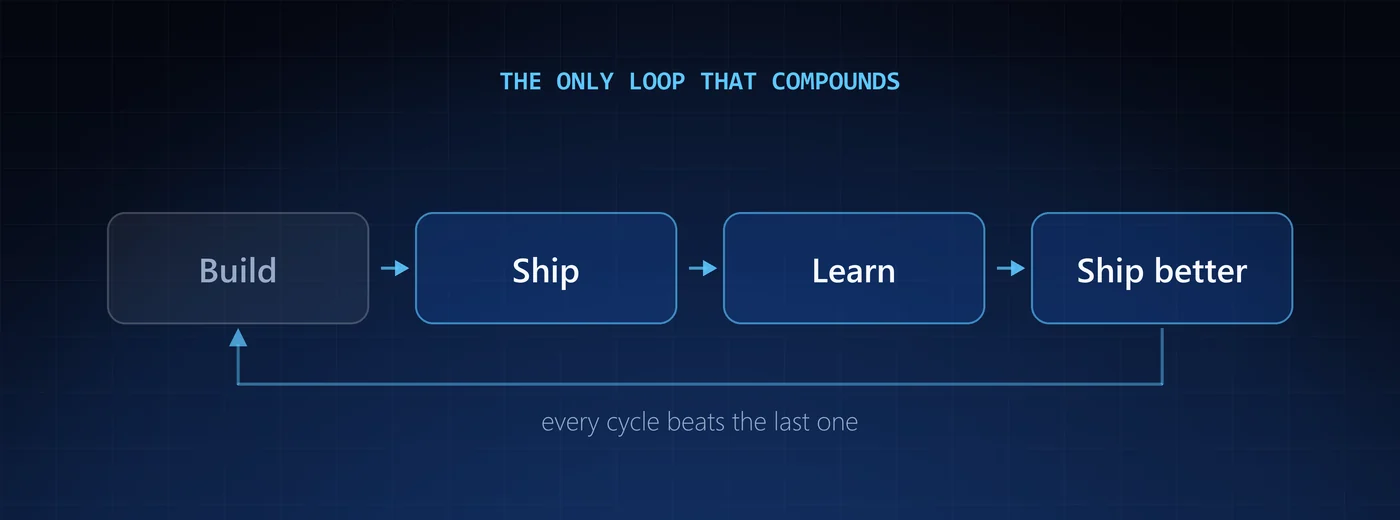
That loop is the reason the opening chart diverges. The person polishing one artifact climbs steeply and then flattens, because a single piece can only get so good. The person shipping repeatedly starts slower and keeps climbing, because every release begins from a better position than the last one.
How We Run This
On client work the discipline is structural rather than a matter of willpower:
- Define done before starting. Scope and acceptance criteria get written at the beginning, when judgment is clear, and not at two in the morning on launch week.
- Separate the launch list from the later list. Every find gets sorted into blocks launch or does not. The second list is a roadmap, not a failure.
- Show work early. Outside eyes catch what matters and ignore what does not, which is exactly the calibration that goes missing after days inside a file.
- Keep releases small. Small changes are easy to reverse and easy to attribute when the numbers move. Large relaunches carry risk that modest updates never do.
- Treat launch as a start. A care plan exists precisely so nobody has to pretend the first version was the last one.
The Short Version
A production error aired to millions of people for decades and almost nobody saw the error, because the show was good at the things the audience came for. Your four-pixel misalignment is that production error. The writing, the clarity, the speed, the usefulness: those are the show.
Build something. Ship. Learn from what comes back. Ship something better. Your next project does not need to be perfect, only better than your last one.
If a project has been sitting at ninety percent for weeks, the remaining ten percent is probably not what is holding things up. Our pricing is published openly and a breakdown of what a custom site costs covers the rest.
Let's get the thing out the door
Thirty minutes. Bring the project that has stalled and we will help you separate what genuinely blocks a launch from what can wait until next month.
Frequently Asked Questions
The phrase means that chasing a flawless version of something often prevents a good version from ever reaching anyone. Past a certain point, extra refinement stops producing gains the audience can perceive, while the cost in time keeps climbing. Work that stays unreleased produces nothing at all, so a good version in the world beats a perfect version still sitting on a hard drive.
A useful test is to ask whether the next change would alter what someone does, rather than how the work looks to the person who made the work. If a change affects whether a visitor understands the offer, trusts the business, or completes the action, the change is worth making. If a change only resolves something the maker notices on the fourth pass, the work is finished.
Launch once the site does the job, then improve on real evidence. A live site generates data a mockup never can: which pages people reach, where they leave, which questions they still ask. Waiting six months for perfection means six months of guessing instead of learning, and the guesses are usually wrong in ways only real traffic reveals.
High standards are measured against the audience and the goal: does the work communicate, function, and hold up under real use. Perfectionism is measured against an internal image of flawlessness that no audience shares. The practical tell is the reason for a change. Standards produce changes you can justify to somebody else. Perfectionism produces changes you can only justify to yourself.
Set the finish line before starting, not while working. Write down what the piece must do and what counts as done, give the work a deadline, and show a draft to somebody outside the project early. Outside eyes catch the problems that matter and ignore the ones that do not, which is exactly the calibration perfectionism destroys.
Launching early helps more often than hurting, because a site cannot accumulate authority until the site exists. What does cause damage is launching broken: missing or duplicate titles and meta descriptions, no sitemap, pages returning errors, or a staging version left open to indexing. Those are correctness problems rather than polish, and all of them are worth fixing before launch.
Anything that breaks trust or cannot be fixed later. Accuracy of claims and pricing, working contact paths and forms, legible content on a phone, accessible contrast and keyboard access, correct redirects when replacing an old site, and security basics. Visual refinement can arrive next week. A form that silently drops enquiries costs business every day the form stays broken.
Often enough that any single change stays small. Small changes are easier to reverse, easier to attribute when numbers move, and far less frightening to approve. A steady cadence of modest improvements compounds faster than occasional large relaunches, and carries a fraction of the risk.